
Killing it with kindness
10 ways to stay motivated when learning a language
The romance is over. You are not sipping coffee with Bruce Springsteen in a Brooklyn street cafe, chatting casually in perfect, charming English. You are staring into an empty fridge at the end of the day, wondering what to feed the kids and what Sandra from Marketing meant by that smiley in her email. Oh yeah, and you didn’t learn any English this week, either.
This is not how you pictured it. You thought it would be different: Yeah, there’s work involved in learning a language, you know this, but surely you should be more fluent by now. Is it worth it?
This is exactly how you pictured it. You’ve been here before. There’s never enough time. Never enough to make a difference. Is it worth it?
What do you do when the going gets tough? When priorities have changed or your workload increases? Even though language learning may never win the battle of priorities in that moment (replying to a mail, calling back a customer is always more urgent), what happens to our language learning goals long term? How do we stay motivated when faced with such a mountain and many other hills to get over first.

1. Set goals.
There are few things more satisfying than achieving something difficult that you set your mind to. A tick on the to do list, the first five kilometer run, winning a new customer. To achieve these things you had to put on your running shoes, head out the door, increase your stamina and fitness bit by bit. You needed to make contact with your new customer, understand their needs, adapt your product offering, convince, negotiate, seal the deal. In short, you had to set goals.
So how do you set goals in language learning? Be honest with yourself. Setting a goal of fluency within six months sounds exciting, but is it really achievable with work and family life? Will it lead to disappointment and frustration or to satisfaction? In order to make sure it’s the latter[1], make your goals achievable.
“I would like to be able to watch a film without subtitles.”
“I would like to read a newspaper article without a dictionary.”
“I would like to conduct a business presentation with ease.”
“I want to be able to chat comfortably to people I meet on holiday."
Those are achievable goals. What are yours?
2. Keep good company.
Find a language buddy or better still a language group. This could be someone from your course or a chat group such as Tea, Talk and Things. Start your own chat group, or use social media. Follow someone or a cause[1] you admire on Twitter. Tweet. Attend events in your target language such a whiskey tasting. Get talking. Obviously language is not just for study. It is meant to be spoken. Having someone to check in with will keep you from throwing in the towel much more so than if you go it alone.
3. Record yourself
Record yourself with your phone speaking for about 5 minutes or so. If you find this difficult, ask a friend to ask you questions. Don’t look at it! You’re tempted, but don’t do it. In six months, record yourself again and compare. In that order. Do it again one year later. Knowing you are going to review it in six months is a wonderful motivator. I think you will surprise yourself with the results.
4. Remind Yourself
You are reading this article now, for a reason. You are motivated and have started for a reason. Most likely a powerful one or more than one. What is this reason? Write it down but instead of keeping it in a drawer, write it on a sticky note in a positive way (see 10 below) and pin it to the wall at your desk, on your fridge, in the car.
Don’t say this:
“I am crap at English not like Sandra from Marketing who seems to be brilliant at everything, except washing her coffee cup.”
Try it like this:
“Now it’s my turn.”
5. Consider binding yourself
No, nothing from Shades of Grey here. If you have a course, say online, or are using an app to refresh your language, will anyone notice if you don’t turn up? If so, maybe it’s time to consider increasing your level of commitment. Trick yourself in advance by choosing a format that will hold you to accountability.[2] Pay in advance. Sign up for a year. Recognize your inner sloth and put up practical blocks to the exit in advance.
6. Prepare to plateau
The learning curve is always steepest in the beginning. So many new concepts, vocabulary, spellings. It’s almost easy to make progress. However when the basic rules are learned and applied, learning a language can seem never ending. I’ve learned so many new vocabulary but I am stumped[3] by the first word in this article! How will I get a handle on all these phrasal verbs or expressions? I still can’t understand Matt Damon without subtitles. Will I ever master this?
This phase can indeed be quite dangerous and feeling demotivated for this reason can throw you off track. I have two solutions:
Be prepared. Remember when you have been there before. When taking a big leap forward in learning something new, it is quite likely that you will take a couple of steps backwards with something you have already learned. Recognize this and keep going anyway. When we forget something we already learned and then relearn it, it moves over time into our long term memory and that’s what we all want.
Recognise the plateau, welcome it and then...
Go back to #1 and set new goals. Repeat step 3. Enjoy. Then make a cup of tea and take some time for number 7...
7. Give yourself credit for your achievements
Look at you now. Reading this and understanding it. That’s progress.
Take some time to look at what you have achieved (write it down and be specific) and be proud. Don’t let the “Yes, buts...” in. Just be proud. It is this which will keep you going. More of that in #10.
8. Just turn up and take it step by step
You haven’t done your homework, you’ve missed a few weeks cause you were sick, the kids were sick, the dog was sick. Is it even worth it going back? There’s a huge mountain of material ahead and well, Sandra from Marketing lived in England for a year. I’ll never be that good. Who am I kidding?
I don’t know about you but when I am climbing a mountain, it kills me to keep looking up. It’s torture seeing how slowly I move towards the peak[1]. I prefer to keep my head down and take it step by step. Having the whole mountain in view all the time is too daunting. Then after a while, when I do look up, I am much closer to my goal.
I often find myself referring back to a Julia Cameron quote from The Artist’s Way, (Macmillian, Nov 2016), where she speaks of handing over the responsibility of the results of the work to a higher power (not worrying about it) and just turning up to take care of the amount work.
“Great Creator, you take care of the quality. I’ll take care of the quantity.”
The humble attitude of taking care of the quantity, leads to continual practice and thus better quality.
Or you can see it like Nike.
“Just do it.”
Whichever philosophy you choose, I guarantee that, the energy you spend turning up is a lot less than that which you spend thinking about not being there and what you missed.
9. Make it a habit
Five minutes during morning coffee, read an article during lunch, watch a 15 minute YouTube video in the evening. Don’t wait until all the stars have aligned for you to find the perfect time to learn a language. Make habits so that you don’t need to have an internal discussion every single time. This is my time for language. It happens now.
10. Be Kind
Forget perfectionism and be kind to yourself.
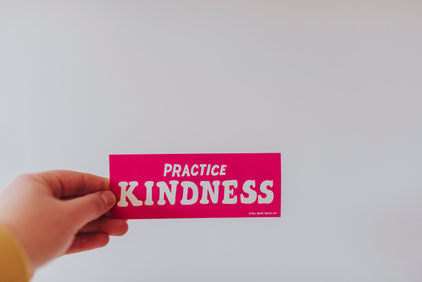
I hate shame. Whenever I have managed to ditch feelings of “you should be able to by now”, “I’m not good enough and everyone else is”, I was able to move forward in a much more sustainable way in whatever project I was working on. Shame will get you off the couch a couple of times. But remembering the joy and exhilaration of running will keep you out there. It frees. Perfectionism is results based. Kindness allows you to show up and be present and that, my friends, is the most difficult part of staying the course of language learning. Staying leads to better results... obviously.
It’s all about the frame of mind. “I have to”, “I really should” can be replaced with “this is my time”, “I can steal a little time here and there”. It’s the flip side[2] of a coin so close together but heading in opposite directions.
I loved Brene Brown’s book on this subject. “The gifts of imperfection”. (Hazelden Aug 2010) Why not read it in English or listen to her TED talk?

Back to the mountain. Language learning is such a broad task and it never ends. A long road up. And the path is not straight.
Some people sprint past you.
Some stay down in the car park.
But what a wonderful feeling at the top, eh?
Kommentar schreiben